DYNAMIC MECHANICAL THERMAL ANALYZER (DMTA)

Dynamic Mechanical Thermal Analyzer (DMTA) Export by Amin Polymer

Amin Polymer is a premier exporter of advanced dynamic mechanical thermal analyzers (DMTA) to GCC and Middle East countries. Our dynamic mechanical analyzer provides precise viscoelastic property measurements for polymers, including storage modulus and damping. Amin Polymer Export to GCC and the Middle East Countries offers competitive dynamic mechanical analyzer price with superior dynamic mechanical analysis equipment. Get in touch with Amin Polymer for dynamic mechanical thermal analysis DMTA solutions tailored to your needs.

1. Dynamic Mechanical Thermal Analyzer (DMTA) Overview and Purpose

The dynamic mechanical thermal analyzer (DMTA) from Amin Polymer is a sophisticated instrument for dynamic mechanical analysis of polymers, measuring viscoelastic behavior under oscillatory stress across temperature and frequency ranges. This dma dynamic mechanical analyzer excels in characterizing materials for automotive, aerospace, and construction sectors dominant in the Middle East. Amin Polymer Export to GCC and the Middle East Countries supplies these dynamic mechanical analysis machines to support innovative polymer applications in extreme conditions.

By applying sinusoidal deformation, the DMTA captures storage modulus (elastic response), loss modulus (viscous dissipation), and tan delta (damping), essential for understanding glass transitions and secondary relaxations. Amin Polymer's dynamic mechanical thermal analyser incorporates advanced controls for accurate dmta analysis of polymers, aiding in material optimization against vibration and thermal cycling.

Commercially, investing in Amin Polymer's dynamic mechanical analyzer for sale means enhanced product longevity and performance, reducing failures in harsh environments. It supports frequency sweeps for master curve generation, predicting long-term behavior via time-temperature superposition. In growing markets, dmta analysis reveals filler effects and compatibility in composites.

Request a Quotation from Amin Polymer to access affordable dynamic mechanical analyzer price options with comprehensive software for data visualization. Our equipment handles diverse modes like tension, bending, and shear, versatile for films, fibers, and rigid samples.

The purpose includes R&D for new formulations and quality assurance, where dynamic thermal analysis detects subtle transitions missed by other techniques. With Amin Polymer Export to GCC and the Middle East Countries, clients gain on-site training, ensuring seamless integration. Overall, this dynamic mechanical thermal analysis dmta combines technical depth with commercial value, empowering manufacturers using dynamic mechanical analysis equipment to achieve superior material insights and market competitiveness. Amin Polymer's dedication to innovation makes our dma dynamic mechanical analyzer a trusted choice globally.

1.1. Dynamic Mechanical Thermal Analyzer (DMTA) Definition and Objective

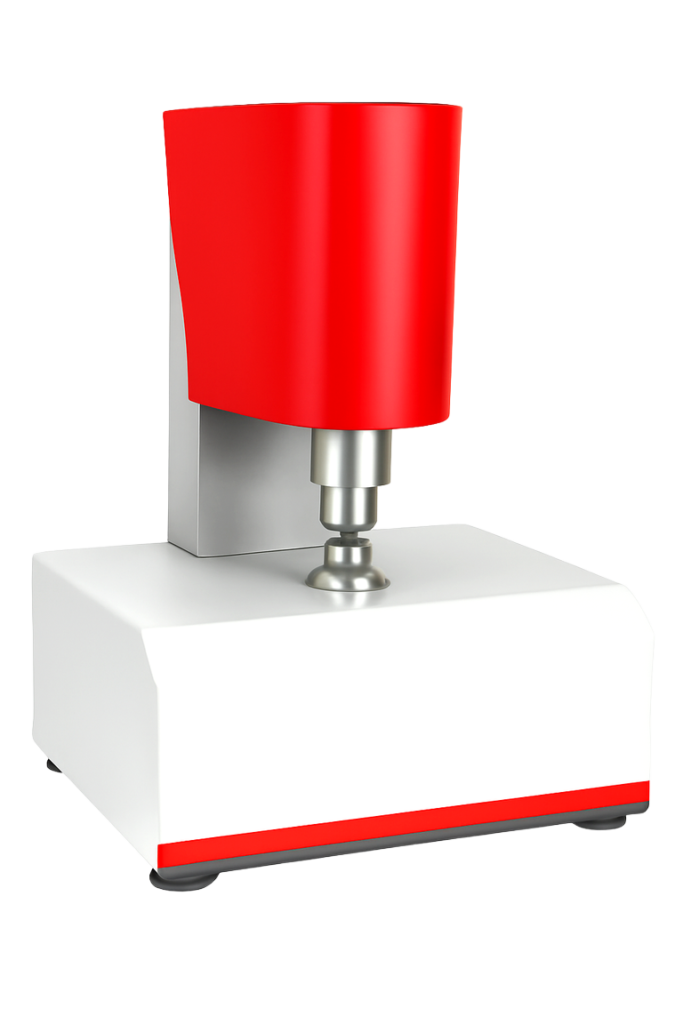
A dynamic mechanical thermal analyzer (DMTA) applies oscillatory stress to samples while varying temperature, measuring complex modulus to characterize viscoelastic properties. Its objective is to determine glass transition temperatures, modulus changes, and damping in polymers for performance prediction. Amin Polymer's dynamic mechanical analyzer focuses on high-resolution dmta analysis for precise polymer evaluation.

1.2. What is the Application of a Dynamic Mechanical Thermal Analyzer (DMTA) and What Does it Measure?

  • Glass Transition Detectio: Identifies Tg via tan delta peaks in dynamic mechanical thermal analysis.
  • Viscoelastic Characterization: Measures storage/loss modulus for stiffness and damping in dynamic mechanical analysis machine.
  • Composite Evaluation: Assesses fiber-matrix interactions using dma dynamic mechanical analyzer.
  • Frequency-Dependent Behavior: Generates master curves for long-term predictions with dynamic mechanical thermal analysis dmta.
  • Vibration Damping Analysis: Evaluates tan delta for automotive and aerospace polymers via dmta analysis of polymers.

The dynamic mechanical thermal analyzer (DMTA) from Amin Polymer is a sophisticated instrument for dynamic mechanical analysis of polymers, measuring viscoelastic behavior under oscillatory stress across temperature and frequency ranges. This dma dynamic mechanical analyzer excels in characterizing materials for automotive, aerospace, and construction sectors dominant in the Middle East. Amin Polymer Export to GCC and the Middle East Countries supplies these dynamic mechanical analysis machines to support innovative polymer applications in extreme conditions.

By applying sinusoidal deformation, the DMTA captures storage modulus (elastic response), loss modulus (viscous dissipation), and tan delta (damping), essential for understanding glass transitions and secondary relaxations. Amin Polymer's dynamic mechanical thermal analyser incorporates advanced controls for accurate dmta analysis of polymers, aiding in material optimization against vibration and thermal cycling.

Commercially, investing in Amin Polymer's dynamic mechanical analyzer for sale means enhanced product longevity and performance, reducing failures in harsh environments. It supports frequency sweeps for master curve generation, predicting long-term behavior via time-temperature superposition. In growing markets, dmta analysis reveals filler effects and compatibility in composites.

Request a Quotation from Amin Polymer to access affordable dynamic mechanical analyzer price options with comprehensive software for data visualization. Our equipment handles diverse modes like tension, bending, and shear, versatile for films, fibers, and rigid samples.

The purpose includes R&D for new formulations and quality assurance, where dynamic thermal analysis detects subtle transitions missed by other techniques. With Amin Polymer Export to GCC and the Middle East Countries, clients gain on-site training, ensuring seamless integration. Overall, this dynamic mechanical thermal analysis dmta combines technical depth with commercial value, empowering manufacturers using dynamic mechanical analysis equipment to achieve superior material insights and market competitiveness. Amin Polymer's dedication to innovation makes our dma dynamic mechanical analyzer a trusted choice globally.
2. Dynamic Mechanical Thermal Analyzer (DMTA) Procedure and Specimen

Operating Amin Polymer's dynamic mechanical thermal analyzer (DMTA) starts with specimen preparation: cutting rectangular bars, films, or fibers to fit clamps, typically 50-60 mm long and 2-5 mm thick. Specimens are mounted in selected modes—tension for films, three-point bending for rigid samples, or shear for soft materials—ensuring secure fixation without slippage.

The procedure involves setting parameters: frequency (often 1 Hz), amplitude (within linear viscoelastic region), and temperature ramp (e.g., 3-5°C/min). The instrument applies oscillatory deformation while heating/cooling, recording response for storage modulus, loss modulus, and tan delta calculations.

Amin Polymer advises preliminary amplitude sweeps to confirm linearity, preventing non-linear artifacts. This dynamic mechanical analysis equipment supports multi-frequency tests for advanced insights. For Middle East applications, humidity control options simulate real conditions.

Commercially, the intuitive procedure enables efficient testing, accelerating development cycles. Amin Polymer Export to GCC and the Middle East Countries includes detailed protocols and accessories, building user confidence in dynamic mechanical analyzer operations. Get in touch with Amin Polymer for customized method development in dmta analysis.

2.1. Dynamic Mechanical Thermal Analyzer (DMTA) Method

Tensile Test Method Description Tensile Test Method Description Tensile Test Method Description

2.2. Technical Specifications of Dynamic Mechanical Thermal Analyzer (DMTA)

TECHNICAL SPECIFICAITON

%table_title_1%%table_title_2%%table_title_3%%table_title_4%

Test Type

Value 1

Value 2

Value 3

Load Capacity

Value 1

Value 2

Value 3

Measurement Accuracy

Value 1

Value 2

Value 3

Test Grips

Value 1

Value 2

Value 3

Loading Rate

Value 1

Value 2

Value 3

User Interface

Value 1

Value 2

Value 3

Measurable Parameters

Value 1

Value 2

Value 3

3. Dynamic Mechanical Thermal Analyzer (DMTA) Standards (ASTM & ISO)


Amin Polymer's dynamic mechanical thermal analyzer (DMTA) adheres to ASTM D4065 for procedures and ISO 6721 series for determination of dynamic properties, ensuring reproducible results in polymer testing. Compliance supports global validation and commercial reliability in viscoelastic measurements.

3.1. ASTM Dynamic Mechanical Thermal Analyzer (DMTA) Standard

ASTM D4065 provides practices for plastics dynamic mechanical properties, including reporting procedures for storage/loss modulus and tan delta. Amin Polymer integrates this with ASTM D7028 for composites Tg via DMA, enhancing dynamic mechanical analyzer accuracy.

3.2. ISO Dynamic Mechanical Thermal Analyzer (DMTA) Standard for Polymers

ISO 6721-1 outlines general principles for dynamic mechanical properties of plastics, with Part 11 specifying glass transition determination. Amin Polymer's equipment complies, facilitating dmta analysis of polymers under standardized conditions.

4. Dynamic Mechanical Thermal Analyzer (DMTA) Results and Mechanical Properties


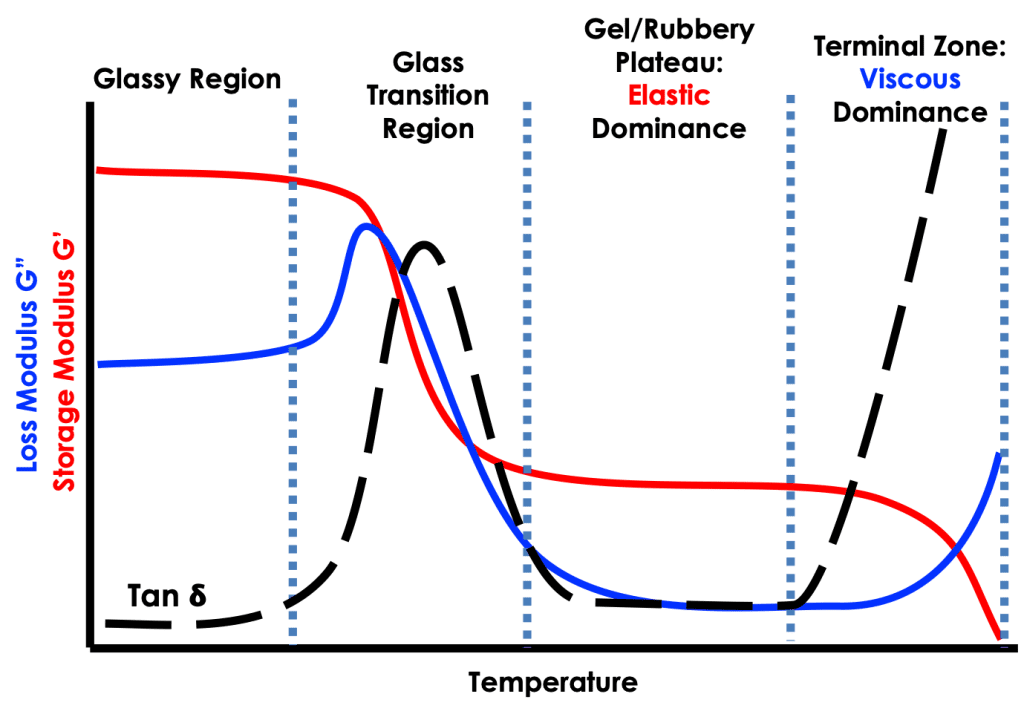
Results from Amin Polymer's dynamic mechanical thermal analyzer (DMTA) include curves of modulus and tan delta versus temperature, revealing glass transitions, rubbery plateaus, and damping peaks that correlate to mechanical properties like stiffness, toughness, and impact resistance. These inform polymer durability under dynamic loads.

Data enables prediction of creep and fatigue behavior. Commercially, optimized properties improve product design and longevity. Request a Quotation to utilize Amin Polymer's expertise in interpreting dynamic mechanical thermal analysis dmta for enhanced mechanical performance.

4.1. Dynamic Mechanical Thermal Analyzer (DMTA) Curve and Data Analysis

Typical DMTA curves show storage modulus drop, loss modulus peak, and tan delta maximum at glass transition, illustrating viscoelastic transitions in polymers.

4.2. Quality Control for Polymer Products

Glass Transition Verification: Ensures consistent Tg using dma dynamic mechanical analyzer.

Modulus Consistency: Monitors storage modulus across batches.

Damping Evaluation: Assesses tan delta for vibration control.

Filler Dispersion Check: Detects inhomogeneities in composites.

Transition Identification: Confirms secondary relaxations for reliability.

5. Export of Dynamic Mechanical Thermal Analyzer (DMTA) Machines to Middle East

Amin Polymer Export to GCC and the Middle East Countries delivers high-quality dynamic mechanical thermal analyzers (DMTA) designed for regional polymer challenges like high temperatures and vibrations. Our dynamic mechanical analysis machines support petrochemical and manufacturing growth, with reliable logistics and technical assistance. Amin Polymer fosters enduring collaborations through superior exports.

5.1. Export Markets and Applications

Key markets are Saudi Arabia, UAE, and Oman, with applications in elastomers, composites, and adhesives. Amin Polymer's DMTA enables critical dmta analysis of polymers in these fields.

5.2. Why Choose Amin Polymer for Dynamic Mechanical Thermal Analyzer (DMTA) Equipment Export

Amin Polymer offers exceptional precision, value-driven dynamic mechanical analyzer price, and dedicated support. Our Amin Polymer Export to GCC and the Middle East Countries provides customization, training, and warranties, securing trust in dynamic mechanical analysis equipment.

6. Frequently Asked Questions

6.1. What is dynamic mechanical thermal analysis (DMTA)?

It measures viscoelastic properties like modulus and damping under oscillation and temperature variation.

6.2. What does a dynamic mechanical analyzer measure?

Storage/loss modulus and tan delta for polymer transitions.

6.3. Which standards apply to DMTA?

ASTM D4065 and ISO 6721 for consistent results.

6.4. What are DMTA applications in polymers?

Characterizing Tg, damping, and frequency behavior using dmta analysis.

6.5. How to obtain a DMTA?

Get in touch with Amin Polymer for quotations and details.

A M I N   P O L Y M E R    T R U S T E D    S E R V I C E


˃Submission of requests via an online contact portal

˃Swift responses to technical and trade-related inquiries

˃Detailed price quotations tailored to export markets

˃Customized design and production to meet international standards

˃Efficient and secure global shipping solutions

˃Comprehensive technical support throughout the product’s lifecycle

Find what you’re looking for