SIMULTANEOUS THERMAL ANALYZER (STA)

Simultaneous Thermal Analyzer (STA) Export by Amin Polymer


Amin Polymer specializes in exporting cutting-edge simultaneous thermal analyzers (STA) to GCC and Middle East countries. Our simultaneous thermal analyzer STA delivers combined TGA and DSC data for precise polymer characterization. Amin Polymer Export to GCC and the Middle East Countries ensures access to reliable simultaneous thermal analysis instruments. Get in touch with Amin Polymer for competitive simultaneous thermal analyzer price options and advanced thermal analysis tools.

1. Simultaneous Thermal Analyzer (STA) Overview and Purpose

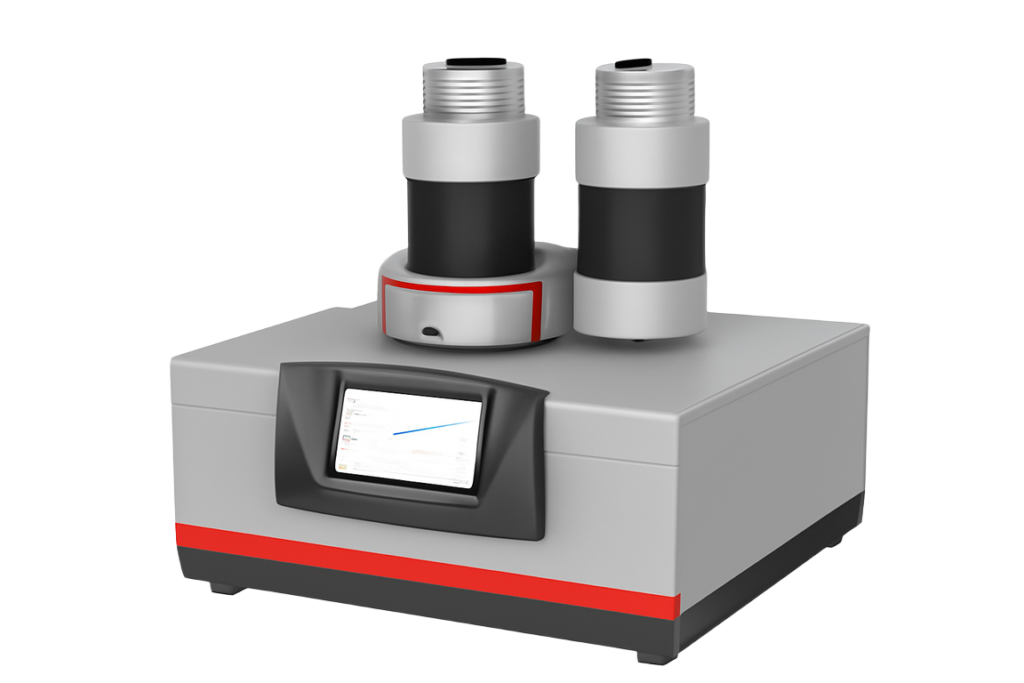
The simultaneous thermal analyzer (STA) from Amin Polymer integrates thermogravimetric analysis (TGA) and differential scanning calorimetry (DSC) in one instrument, offering comprehensive simultaneous thermal analysis for polymers. This simultaneous thermal analyzer STA is indispensable for industries in petrochemicals, plastics manufacturing, and composites, thriving in the Middle East. Amin Polymer Export to GCC and the Middle East Countries targets these sectors with high-performance simultaneous thermal analysis STA equipment.

By performing simultaneous measurements, the STA provides correlated data on mass changes and heat flows under identical conditions, enhancing accuracy in thermal analysis techniques. It excels in identifying decomposition, oxidation, and phase transitions, vital for polymer stability in extreme climates. Amin Polymer's STA features intuitive thermal analysis software for seamless data interpretation, supporting research and quality assurance.

Commercially, adopting Amin Polymer's simultaneous thermal analyzer uses streamlines testing, reducing time and costs while improving product reliability. In regions with rapid industrial growth, understanding thermal behavior ensures materials withstand high temperatures and processing stresses. The instrument's versatility covers simultaneous thermal analysis instrument applications from fillers quantification to oxidative stability.

Request a Quotation from Amin Polymer to discover affordable simultaneous thermal analyzer price points tailored to your needs. Our STA supports evolved gas analysis compatibility, adding depth to investigations. Amin Polymer prioritizes robust designs for demanding environments, fostering trust through consistent performance.

The purpose extends to predictive modeling, where data informs material formulations for enhanced durability. With Amin Polymer Export to GCC and the Middle East Countries, clients receive training and support, maximizing investment returns. Overall, this simultaneous thermal analyzer (STA) blends technical excellence with commercial advantages, empowering polymer producers to innovate confidently using advanced thermal analysis tools. Amin Polymer's expertise ensures every simultaneous thermal analyzer meets global demands efficiently.

1.1. Simultaneous Thermal Analyzer (STA) Definition and Objective

A simultaneous thermal analyzer (STA) is an advanced instrument that conducts simultaneous thermal analysis by combining TGA for mass change monitoring and DSC for heat flow detection on the same sample. Its objective is to provide correlated insights into thermal stability, composition, and transitions in polymers. Amin Polymer's STA focuses on precise simultaneous thermal analysis STA for material optimization.

1.2. What is the Application of a Simultaneous Thermal Analyzer (STA) and What Does it Measure?

  • Polymer Decomposition Analysis: Measures weight loss and endothermic/exothermic events in thermal analysis techniques.
  • Compositional Quantification: Determines filler content and volatiles via simultaneous thermal analysis instrument data.
  • Oxidative Stability Testing: Evaluates material performance under oxygen using thermal analysis tools.
  • Phase Transition Studies: Detects glass transition, melting, and crystallization with thermal analysis software.
  • Thermal Stability Assessment: Tracks decomposition temperatures for real-world applications in harsh environments.

The simultaneous thermal analyzer (STA) from Amin Polymer integrates thermogravimetric analysis (TGA) and differential scanning calorimetry (DSC) in one instrument, offering comprehensive simultaneous thermal analysis for polymers. This simultaneous thermal analyzer STA is indispensable for industries in petrochemicals, plastics manufacturing, and composites, thriving in the Middle East. Amin Polymer Export to GCC and the Middle East Countries targets these sectors with high-performance simultaneous thermal analysis STA equipment.

By performing simultaneous measurements, the STA provides correlated data on mass changes and heat flows under identical conditions, enhancing accuracy in thermal analysis techniques. It excels in identifying decomposition, oxidation, and phase transitions, vital for polymer stability in extreme climates. Amin Polymer's STA features intuitive thermal analysis software for seamless data interpretation, supporting research and quality assurance.

Commercially, adopting Amin Polymer's simultaneous thermal analyzer uses streamlines testing, reducing time and costs while improving product reliability. In regions with rapid industrial growth, understanding thermal behavior ensures materials withstand high temperatures and processing stresses. The instrument's versatility covers simultaneous thermal analysis instrument applications from fillers quantification to oxidative stability.

Request a Quotation from Amin Polymer to discover affordable simultaneous thermal analyzer price points tailored to your needs. Our STA supports evolved gas analysis compatibility, adding depth to investigations. Amin Polymer prioritizes robust designs for demanding environments, fostering trust through consistent performance.

The purpose extends to predictive modeling, where data informs material formulations for enhanced durability. With Amin Polymer Export to GCC and the Middle East Countries, clients receive training and support, maximizing investment returns. Overall, this simultaneous thermal analyzer (STA) blends technical excellence with commercial advantages, empowering polymer producers to innovate confidently using advanced thermal analysis tools. Amin Polymer's expertise ensures every simultaneous thermal analyzer meets global demands efficiently.
2. Simultaneous Thermal Analyzer (STA) Procedure and Specimen

Using Amin Polymer's simultaneous thermal analyzer (STA) involves straightforward preparation: weigh small specimens (5-20 mg) of polymer powder, pellets, or films into crucibles, ensuring uniform placement for accurate simultaneous thermal analysis. The procedure starts with purging the system with inert gas like nitrogen or air for oxidative studies, followed by programming heating rates typically 10-20°C/min.

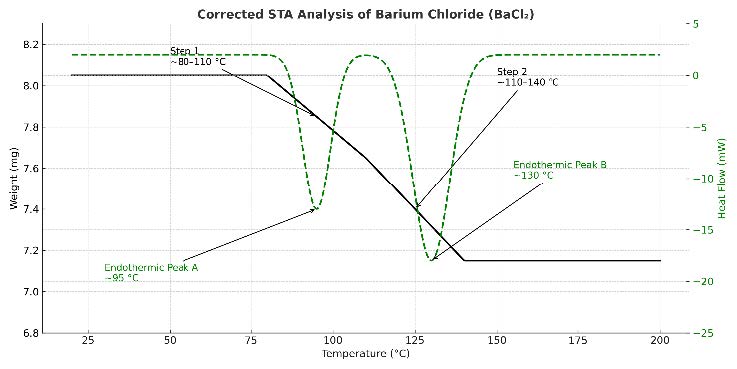
As the run progresses, the STA simultaneously records mass changes (TGA) and heat flows (DSC), capturing events like dehydration, decomposition, or melting. Advanced thermal analysis software automates baseline corrections and peak integrations for reliable results. Amin Polymer recommends reference materials for calibration, ensuring reproducibility.

Specimen requirements are minimal, allowing analysis of diverse forms without extensive preparation. This efficiency is ideal for high-throughput labs. For Amin Polymer Export to GCC and the Middle East Countries, we supply accessories like auto-samplers for enhanced productivity.

Commercially, the streamlined procedure accelerates R&D cycles, providing quick feedback on formulations. Get in touch with Amin Polymer for protocol guidance suited to your simultaneous thermal analyzer uses.

2.1. Simultaneous Thermal Analyzer (STA) Method

Tensile Test Method Description Tensile Test Method Description Tensile Test Method Description

2.2. Technical Specifications of Simultaneous Thermal Analyzer (STA)


TECHNICAL SPECIFICAITON

%table_title_1%%table_title_2%%table_title_3%%table_title_4%

Test Type

Value 1

Value 2

Value 3

Load Capacity

Value 1

Value 2

Value 3

Measurement Accuracy

Value 1

Value 2

Value 3

Test Grips

Value 1

Value 2

Value 3

Loading Rate

Value 1

Value 2

Value 3

User Interface

Value 1

Value 2

Value 3

Measurable Parameters

Value 1

Value 2

Value 3

3. Simultaneous Thermal Analyzer (STA) Standards (ASTM & ISO)

Amin Polymer's simultaneous thermal analyzer (STA) complies with key standards including ISO 11358 for TG/DSC procedures and ASTM E793 for enthalpies of fusion/melting, ensuring validated results in polymer testing. Adherence to these facilitates international acceptance and trust in simultaneous thermal analysis data.

3.1. ASTM Simultaneous Thermal Analyzer (STA) Standard

ASTM E793 covers determination of enthalpies using DSC, integral to STA for accurate caloric measurements in polymers. Amin Polymer integrates this with TGA protocols like ASTM E2550 for thermal stability, enhancing simultaneous thermal analyzer reliability.

3.2. ISO Simultaneous Thermal Analyzer (STA) Standard for Polymers

ISO 11358 specifies general principles for simultaneous TG/DSC, ensuring identical conditions for both signals. Amin Polymer's equipment supports this alongside ISO 11357 series for plastics DSC, promoting consistent simultaneous thermal analysis STA outcomes.

4. Simultaneous Thermal Analyzer (STA) Results and Mechanical Properties

Results from Amin Polymer's simultaneous thermal analyzer (STA) yield overlaid TGA/DSC curves, revealing correlated mass and energy changes that inform mechanical properties like thermal resistance and elasticity in polymers. These insights guide improvements in toughness and processing.

Overlapping data distinguishes reactions, aiding predictive lifetime estimates. Commercially, optimized properties boost product performance and market value. Request a Quotation to harness Amin Polymer's STA for in-depth simultaneous thermal analysis interpretations impacting mechanical behavior.

4.1. Simultaneous Thermal Analyzer (STA) Curve and Data Analysis


Typical curves display TGA weight loss alongside DSC heat flow peaks, illustrating transitions like glass transition or decomposition in polymers.

4.2. Quality Control for Polymer Products

Thermal Stability Verification: Confirms decomposition thresholds using simultaneous thermal analysis.

Composition Accuracy: Quantifies additives and fillers via thermal analysis tools.

Transition Consistency: Monitors glass transition and melting points across batches.

Oxidation Resistance: Tests stability in air for durable products.

Volatiles Detection: Ensures low moisture/residuals with simultaneous thermal analyzer STA.

5. Export of Simultaneous Thermal Analyzer (STA) Machines to Middle East


Amin Polymer Export to GCC and the Middle East Countries offers premium simultaneous thermal analyzers (STA) customized for regional polymer and petrochemical needs. Our machines deliver precise simultaneous thermal analysis instrument performance in high-demand sectors, with efficient logistics and compliance support. Amin Polymer builds partnerships through reliable exports.

5.1. Export Markets and Applications

Markets include Saudi Arabia, UAE, and Qatar, with applications in plastics, composites, and oil additives. Amin Polymer's STA supports thermal analysis techniques critical for quality in these industries.

5.2. Why Choose Amin Polymer for Simultaneous Thermal Analyzer (STA) Equipment Export

Amin Polymer provides superior technology, attractive simultaneous thermal analyzer price, and comprehensive service. Our Amin Polymer Export to GCC and the Middle East Countries includes training and warranties, ensuring long-term satisfaction and trust in simultaneous thermal analyzers.

6. Frequently Asked Questions

6.1. What is a simultaneous thermal analyzer (STA)?

It combines TGA and DSC for simultaneous mass and heat flow measurements.

6.2. What does STA measure in polymers?

Thermal transitions, stability, and composition via simultaneous thermal analysis.

6.3. Which standards does it follow?

ISO 11358 and ASTM E793 for reliable data.

6.4. What are common applications?

Polymer characterization, decomposition, and oxidative studies using thermal analysis tools.

6.5. How to purchase?

Get in touch with Amin Polymer for details and quotations.

A M I N   P O L Y M E R    T R U S T E D    S E R V I C E


˃Submission of requests via an online contact portal

˃Swift responses to technical and trade-related inquiries

˃Detailed price quotations tailored to export markets

˃Customized design and production to meet international standards

˃Efficient and secure global shipping solutions

˃Comprehensive technical support throughout the product’s lifecycle

Find what you’re looking for