MELT VOLUME RATE (MVR)

Melt Volume Rate (MVR) tester Export by Amin Polymer

Amin Polymer excels in providing advanced melt volume rate testers for polymer quality assessment. Our equipment measures melt volume flow rate accurately, aiding in melt volume rate calculation and understanding melt flow rate vs melt volume rate differences. Through Amin Polymer Export to GCC and the Middle East Countries, we supply reliable solutions for industries requiring precise melt volume rate mvr data. Get in touch with Amin Polymer to access tools that enhance polymer processing efficiency and ensure superior product performance.

1. Melt Volume Rate (MVR) tester Overview and Purpose

Amin Polymer offers state-of-the-art melt volume rate testers designed to evaluate the flow characteristics of thermoplastic polymers. The melt volume rate, often abbreviated as MVR, is a critical parameter that quantifies the volume of molten polymer extruded through a standardized die under specific temperature and load conditions, typically expressed in cm³/10 min. This measurement provides insights into the polymer's viscosity and processability, distinguishing it from melt flow rate (MFR), which is mass-based in g/10 min. Understanding melt flow rate to melt volume rate conversion is essential, as MVR accounts for density variations, making it more suitable for certain applications.

In the polymer industry, the melt volume flow rate definition highlights its role in assessing how easily a material flows during processing like injection molding or extrusion. Amin Polymer's testers ensure precise melt volume rate formula application, where MVR = (volume extruded / time) × 10, helping manufacturers optimize formulations. For instance, a higher melt volume rate unit indicates lower molecular weight and better flow, crucial for high-speed production.

Amin Polymer Export to GCC and the Middle East Countries caters to booming petrochemical sectors in regions like Saudi Arabia and the UAE, where accurate melt volume index testing supports the development of durable plastics for construction and packaging. Our devices are engineered for reliability, featuring automated controls that minimize human error and deliver consistent results. What is melt volume flow rate? It's the volumetric flow under standardized conditions, and Amin Polymer's equipment excels in measuring it, building trust through robust construction and compliance with global standards.

Commercially, investing in Amin Polymer's melt volume rate vs melt flow rate capable testers reduces material waste and enhances product quality, leading to cost savings. We provide comprehensive support, including training, to encourage seamless integration into your operations. The melt volume-flow rate definition underscores its volumetric nature, and our testers handle a wide range of polymers, from polyolefins to engineering resins.

Whether you're calculating melt volume rate for quality control or comparing mvr melt volume rate across batches, Amin Polymer stands as a partner in innovation. Request a Quotation to explore how our solutions can elevate your polymer exports and manufacturing prowess in the competitive Middle East market.
1.1. Melt Volume Rate (MVR) tester Definition and Objective


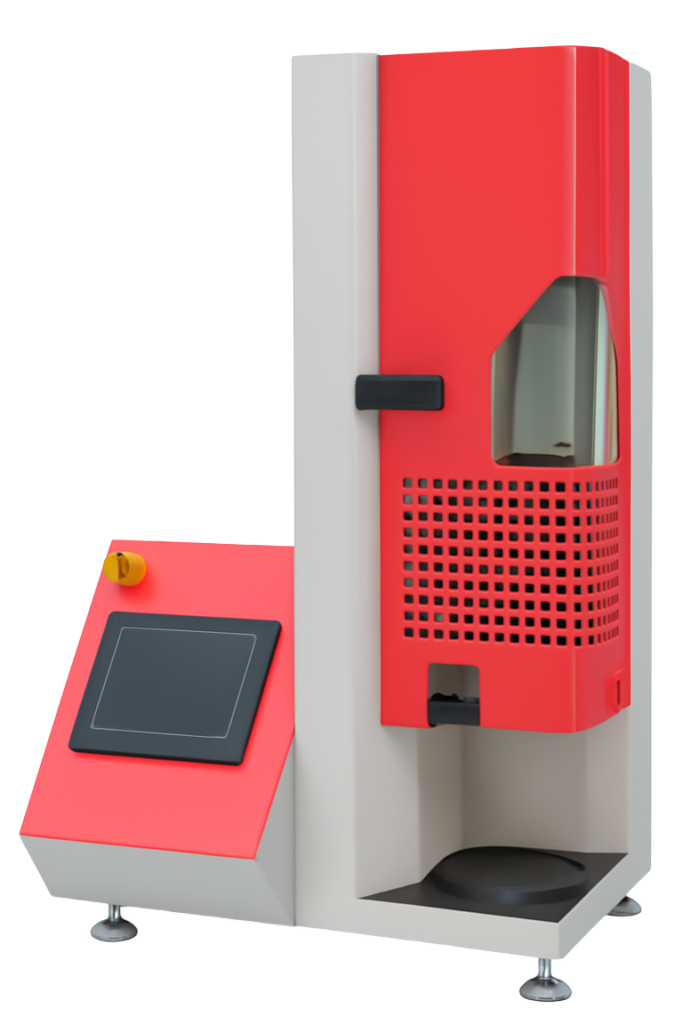
The melt volume rate tester is an instrument that determines the melt volume-flow rate (MVR) of thermoplastics by measuring the volume of melt extruded per unit time under defined conditions. Its objective is to evaluate polymer flow behavior, aiding in material selection, process optimization, and ensuring consistency in manufacturing.

1.2. What is the Application of Melt Volume Rate (MVR) tester and What Does it Measure?

  • Quality Control in Polymer Production: Assesses melt rate for batch consistency, measuring volumetric flow to detect variations in molecular weight.
  • Material Selection for Processing: Compares melt volume rate definition across resins, measuring ease of flow for injection molding suitability.
  • Process Optimization: Evaluates melt volume rate formula impacts, measuring viscosity under heat and load for extrusion efficiency.
  • Research and Development: Tests new formulations, measuring melt volume rate to melt flow rate differences for improved mechanical properties.
  • Compliance Testing: Ensures adherence to standards, measuring melt volume rate unit in cm³/10 min for regulatory approvals.
  • Density-Independent Analysis: Unlike MFR, measures volume directly, ideal for polymers with varying densities.
  • Failure Analysis: Investigates processing issues, measuring what is melt volume rate to identify flow-related defects.

Amin Polymer offers state-of-the-art melt volume rate testers designed to evaluate the flow characteristics of thermoplastic polymers. The melt volume rate, often abbreviated as MVR, is a critical parameter that quantifies the volume of molten polymer extruded through a standardized die under specific temperature and load conditions, typically expressed in cm³/10 min. This measurement provides insights into the polymer's viscosity and processability, distinguishing it from melt flow rate (MFR), which is mass-based in g/10 min. Understanding melt flow rate to melt volume rate conversion is essential, as MVR accounts for density variations, making it more suitable for certain applications.

In the polymer industry, the melt volume flow rate definition highlights its role in assessing how easily a material flows during processing like injection molding or extrusion. Amin Polymer's testers ensure precise melt volume rate formula application, where MVR = (volume extruded / time) × 10, helping manufacturers optimize formulations. For instance, a higher melt volume rate unit indicates lower molecular weight and better flow, crucial for high-speed production.

Amin Polymer Export to GCC and the Middle East Countries caters to booming petrochemical sectors in regions like Saudi Arabia and the UAE, where accurate melt volume index testing supports the development of durable plastics for construction and packaging. Our devices are engineered for reliability, featuring automated controls that minimize human error and deliver consistent results. What is melt volume flow rate? It's the volumetric flow under standardized conditions, and Amin Polymer's equipment excels in measuring it, building trust through robust construction and compliance with global standards.

Commercially, investing in Amin Polymer's melt volume rate vs melt flow rate capable testers reduces material waste and enhances product quality, leading to cost savings. We provide comprehensive support, including training, to encourage seamless integration into your operations. The melt volume-flow rate definition underscores its volumetric nature, and our testers handle a wide range of polymers, from polyolefins to engineering resins.

Whether you're calculating melt volume rate for quality control or comparing mvr melt volume rate across batches, Amin Polymer stands as a partner in innovation. Request a Quotation to explore how our solutions can elevate your polymer exports and manufacturing prowess in the competitive Middle East market.
2. Melt Volume Rate (MVR) tester Procedure and Specimen


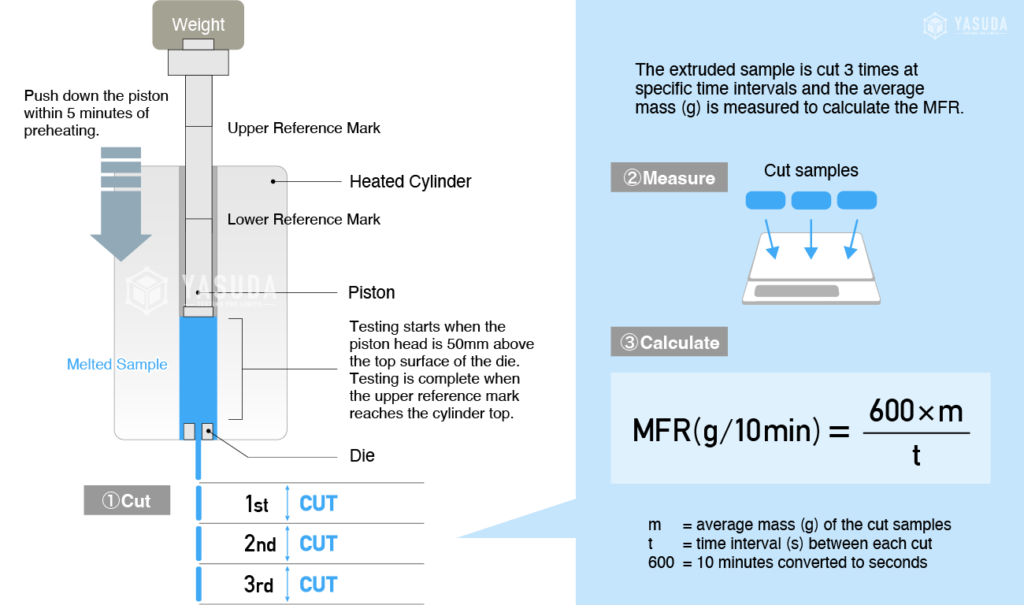
Using Amin Polymer's melt volume rate tester involves a straightforward yet precise procedure to obtain accurate melt volume flow rate mvr results. Begin by preparing the specimen, typically 4-7 grams of thermoplastic granules or powder, ensuring it's dry to avoid moisture interference. Preheat the barrel to the specified temperature, such as 190°C for polyethylene or 230°C for polypropylene, based on the polymer type.

Load the specimen into the heated barrel and allow a pre-melt time of about 5-7 minutes for uniform melting. Insert the piston with the selected load, commonly 2.16 kg or 5 kg, to apply pressure. As the melt extrudes through the die (inner diameter 2.095 mm), the tester automatically measures the piston displacement to calculate the volume extruded over time intervals.

For melt volumen rate determination, collect data at regular points, ensuring the test runs for at least 10 minutes or until sufficient extrudate is obtained. Post-test, clean the apparatus thoroughly to prevent contamination. Amin Polymer Export to GCC and the Middle East Countries includes user-friendly interfaces for these steps, promoting safe and efficient operation.

Specimens must be representative samples, free from additives that could skew results. Our testers support various polymers, enhancing versatility. Get in touch with Amin Polymer for customized setups that streamline your melt volume rate testing.

2.1. Melt Volume Rate (MVR) tester Method

Tensile Test Method Description Tensile Test Method Description Tensile Test Method Description

2.2. Technical Specifications of Melt Volume Rate (MVR) tester

TECHNICAL SPECIFICAITON

%table_title_1%%table_title_2%%table_title_3%%table_title_4%

Test Type

Value 1

Value 2

Value 3

Load Capacity

Value 1

Value 2

Value 3

Measurement Accuracy

Value 1

Value 2

Value 3

Test Grips

Value 1

Value 2

Value 3

Loading Rate

Value 1

Value 2

Value 3

User Interface

Value 1

Value 2

Value 3

Measurable Parameters

Value 1

Value 2

Value 3

3. Melt Volume Rate (MVR) tester Standards


Amin Polymer's melt volume rate testers adhere to key international standards, ensuring reliable and comparable results for polymer evaluation. These standards define test conditions for accurate melt volume rate measurement, fostering trust in global trade.

ASTM D1238 outlines procedures for determining melt flow rates, including MVR, using an extrusion plastometer. It specifies methods A (manual) and B (automatic volume measurement), with conditions like temperature and load tailored to polymers.

ISO 1133 governs the determination of MFR and MVR for thermoplastics, emphasizing volumetric flow in procedure B. Amin Polymer Export to GCC and the Middle East Countries ensures compliance, supporting precise testing for regional industries.

4. Melt Volume Rate (MVR) tester Results and Mechanical Properties

Results from Amin Polymer's melt volume rate testers reveal crucial insights into polymer behavior, such as higher MVR indicating lower viscosity and easier processing, which often correlates with reduced mechanical strength due to lower molecular weight. Conversely, lower MVR suggests higher toughness and impact resistance, vital for durable applications.

Data analysis involves interpreting extrusion rates against standards, linking MVR to properties like tensile strength and elongation. Amin Polymer builds confidence with testers that provide reproducible outcomes, encouraging informed purchasing decisions.

4.1. Melt Volume Rate (MVR) tester Curve and Data Analysis

4.2. Quality Control for Polymer Products

  • Batch Consistency: Monitors melt volume rate for uniform flow properties.
  • Viscosity Verification: Ensures optimal processing by analyzing MVR variations.
  • Molecular Weight Assessment: Indirectly evaluates chain length impacting strength.
  • Defect Prevention: Detects flow issues early to avoid manufacturing flaws.
  • Standard Compliance: Aligns with ASTM/ISO for market acceptance.

5. Export of Melt Volume Rate (MVR) testers to Middle East


Amin Polymer Export to GCC and the Middle East Countries targets expanding polymer markets in Kuwait, Bahrain, and beyond, delivering melt volume rate testers that support advanced manufacturing. Prime markets include Qatar's plastics sector, with applications in automotive parts and packaging, where MVR testing ensures material reliability. Amin Polymer's proven expertise offers durable, compliant equipment with exceptional after-sales service. Request a Quotation to benefit from our tailored solutions that drive efficiency.


6. Frequently Asked Questions

6.1. What is melt volume rate?

It's the volumetric flow of molten polymer, measured in cm³/10 min.

6.2. How does Amin Polymer ensure tester accuracy?

Through calibration to ASTM/ISO standards.

6.3. What applications suit MVR testing in the Middle East?

Polymer processing for oil and construction industries.

6.4. Can testers handle multiple polymers?

Yes, with adjustable parameters for versatility.

6.5. Why select Amin Polymer Export to GCC and the Middle East Countries?

For reliable, innovative equipment with global support.

A M I N   P O L Y M E R    T R U S T E D    S E R V I C E


˃Submission of requests via an online contact portal

˃Swift responses to technical and trade-related inquiries

˃Detailed price quotations tailored to export markets

˃Customized design and production to meet international standards

˃Efficient and secure global shipping solutions

˃Comprehensive technical support throughout the product’s lifecycle

Find what you’re looking for