MELT FLOW INDEX (MFI)

Melt Flow Index (MFI) Test Machine Export by Amin Polymer

Amin Polymer leads in exporting high-quality melt flow index test machines to GCC and the Middle East countries. Our melt flow index apparatus ensures precise melt flow rate measurements for polymers like HDPE and polypropylene. Amin Polymer Export to GCC and the Middle East Countries focuses on reliable melt flow index testers that meet global standards. Request a Quotation today to enhance your polymer testing capabilities with our advanced melt flow index equipment. Trust Amin Polymer for superior melt flow index machines that drive quality control in the region.

1. Melt Flow Index (MFI) Test Overview and Purpose

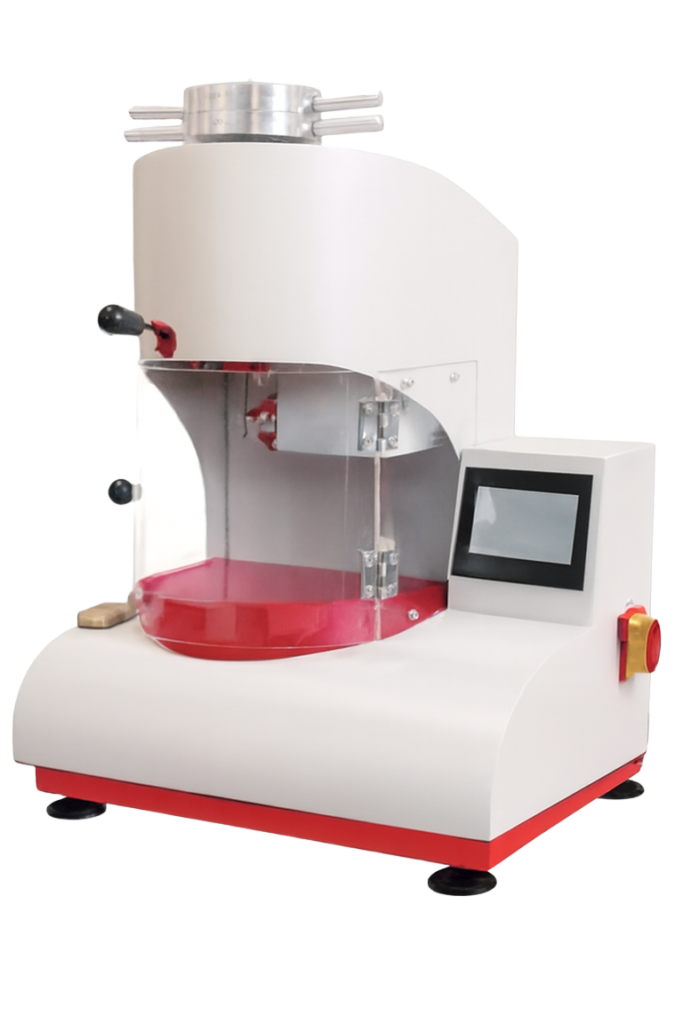
The melt flow index test is a critical evaluation method in the polymer industry, providing insights into the flow properties of thermoplastic materials. Amin Polymer specializes in manufacturing and exporting melt flow index testers that deliver accurate results for melt flow rate and melt volume flow rate. This test, also known as the melt flow index (MFI), measures how easily a polymer melts and flows under specific conditions, which is essential for processing optimization.

At Amin Polymer, our melt flow index machines are designed to handle various polymers, including HDPE with melt flow index for HDPE ranging typically from 0.1 to 50 g/10min, and polypropylene with melt flow index for polypropylene often between 1 to 100 g/10min. The melt flow index definition revolves around the mass of polymer extruded through a die in 10 minutes, offering a direct correlation to molecular weight and viscosity. Lower melt flow index values indicate higher viscosity, suitable for applications requiring strength, while higher values suggest easier processing for injection molding.

1.1. Melt Flow Index (MFI) Test Definition and Objective


The Melt Flow Index (MFI) test defines the flow rate of molten polymers under standardized temperature and load. Its objective is to assess processability, ensuring materials meet specifications for manufacturing. Amin Polymer's Melt Flow Index (MFI) apparatus adheres to this, offering reliable Melt Flow Index (MFI) meaning for quality assurance.

1.2. What is the Application of a Melt Flow Index (MFI) Test and What Does it Measure?


  • Material Selection: Measures melt flow rate for choosing polymers like melt flow index HDPE or melt flow index PP for specific applications.
  • Quality Control: Determines melt flow index unit (g/10min) to ensure batch consistency in production.
  • Process Optimization: Evaluates melt flow index vs viscosity to predict extrusion behavior.
  • Research and Development: Analyzes melt flow index equation for new polymer formulations.
  • Compliance Testing: Checks against standards like melt flow index ASTM D1238 PDF for regulatory adherence.

The melt flow index test is a critical evaluation method in the polymer industry, providing insights into the flow properties of thermoplastic materials. Amin Polymer specializes in manufacturing and exporting melt flow index testers that deliver accurate results for melt flow rate and melt volume flow rate. This test, also known as the melt flow index (MFI), measures how easily a polymer melts and flows under specific conditions, which is essential for processing optimization.

At Amin Polymer, our melt flow index machines are designed to handle various polymers, including HDPE with melt flow index for HDPE ranging typically from 0.1 to 50 g/10min, and polypropylene with melt flow index for polypropylene often between 1 to 100 g/10min. The melt flow index definition revolves around the mass of polymer extruded through a die in 10 minutes, offering a direct correlation to molecular weight and viscosity. Lower melt flow index values indicate higher viscosity, suitable for applications requiring strength, while higher values suggest easier processing for injection molding.

2. Melt Flow Index (MFI) Test Procedure and Specimen

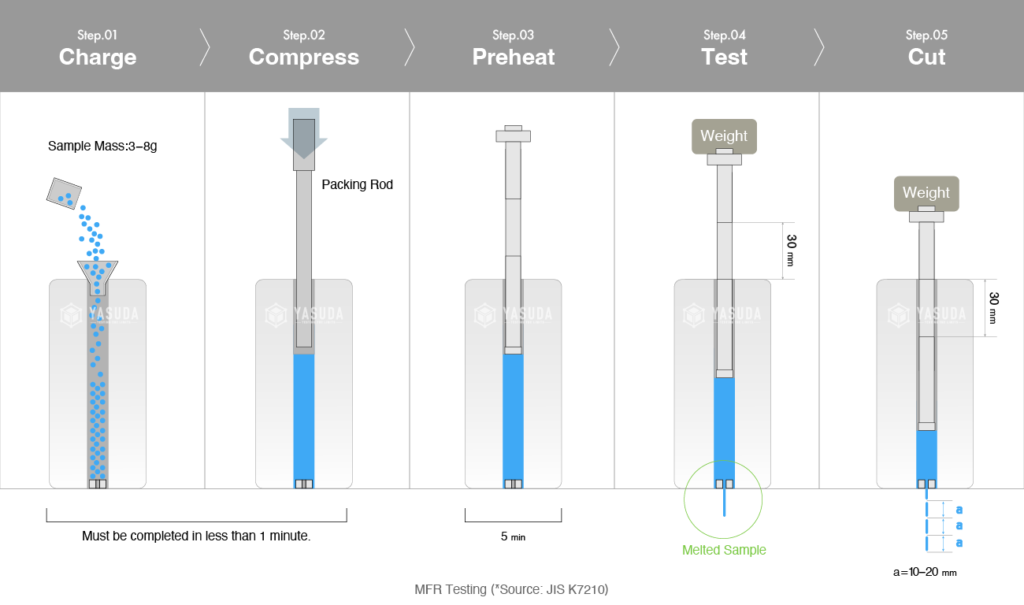
The melt flow index test procedure involves heating a polymer specimen in a barrel to a specified temperature, then applying a load to extrude it through a die. Amin Polymer's melt flow index machine simplifies this with precise controls. First, prepare the specimen by granulating or flaking the polymer, typically 4-8 grams. Preheat the apparatus to temperatures like 190°C for polyethylene or 230°C for polypropylene.

Load the specimen into the heated barrel, insert a piston, and apply a standard weight (e.g., 2.16 kg for many tests). Allow a preheat time of about 5-7 minutes for the material to melt uniformly. Once molten, the polymer flows out, and the extrudate is collected over a timed interval. Cut and weigh the extrudate to calculate the melt flow rate using the melt flow index calculation formula.

2.1. Melt Flow Index (MFI) Test Method

Tensile Test Method Description Tensile Test Method Description Tensile Test Method Description

2.2. Technical Specifications of Melt Flow Index (MFI) Test Machine

TECHNICAL SPECIFICAITON

%table_title_1%%table_title_2%%table_title_3%%table_title_4%

Test Type

Value 1

Value 2

Value 3

Load Capacity

Value 1

Value 2

Value 3

Measurement Accuracy

Value 1

Value 2

Value 3

Test Grips

Value 1

Value 2

Value 3

Loading Rate

Value 1

Value 2

Value 3

User Interface

Value 1

Value 2

Value 3

Measurable Parameters

Value 1

Value 2

Value 3

3. Melt Flow Index (MFI) Test Standards


Amin Polymer adheres to international standards for our melt flow index testers, ensuring compatibility for exports. These standards guarantee consistent melt flow index results across global markets.

ASTM D1238 outlines procedures for measuring melt flow rates of thermoplastics using an extrusion plastometer. It includes methods A (manual) and B (automatic), covering melt flow index ASTM for polymers like melt flow index polypropylene.

ISO 1133 specifies determination of melt mass-flow rate (MFR) and melt volume-flow rate (MVR). It aligns with melt flow index standard, supporting melt flow rate units in cm³/10min for precise polymer evaluation.

4. Melt Flow Index (MFI) Test Results and Mechanical Properties

Melt flow index test results reveal key mechanical properties, such as tensile strength and elongation, influenced by flow behavior. Higher MFI indicates lower molecular weight, often leading to reduced impact resistance but better processability. Amin Polymer's equipment provides detailed data analysis, including melt flow index chart interpretations.

In polymers like melt flow rate of HDPE or melt flow rate of polypropylene, results correlate with end-use performance. For instance, melt flow rate for polypropylene around 10-20 g/10min suits blow molding. Our melt flow index tester enables melt flow rate conversion and analysis, fostering trust in material quality.

Amin Polymer Export to GCC and the Middle East Countries delivers machines that output reliable melt flow index PDF reports for documentation. This aids in predicting properties like melt flow index vs molecular weight, where inverse relations affect durability.

4.1. Melt Flow Index (MFI) Test Curve and Data Analysis

4.2. Quality Control for Polymer Products

  • Batch Consistency: Ensures uniform melt flow index meaning across productions.
  • Defect Reduction: Identifies variations in melt flow rate testing.
  • Material Verification: Confirms melt mass-flow rate against specifications.
  • Process Monitoring: Tracks melt volume rate for optimization.
  • Compliance Assurance: Meets melt flow rate unit standards for exports.

5. Export of Melt Flow Index (MFI) Test Machines to Middle East


Amin Polymer excels in exporting melt flow index machines to the Middle East, catering to growing polymer industries. Our focus on GCC countries ensures timely deliveries and support.

Key markets include Saudi Arabia, UAE, and Qatar, where applications span petrochemicals and plastics manufacturing. Amin Polymer Export to GCC and the Middle East Countries targets melt flow index test needs in these sectors.


6. Frequently Asked Questions

6.1. What is melt flow rate?

Melt flow rate measures polymer flow in grams per 10 minutes under standard conditions.

6.2. How is melt flow index calculated?

Using the formula MFR = (600 × mass) / time, derived from extrudate weight.

6.3. What is the melt flow index unit?

It's g/10min, indicating mass flow rate.

6.4. Difference between melt flow rate and melt flow index?

They are often synonymous, but MFR specifies mass, while MFI is the test.

6.5. Why use melt flow index tester?

For quality control in polymers like HDPE and PP, ensuring processability.

A M I N   P O L Y M E R    T R U S T E D    S E R V I C E


˃Submission of requests via an online contact portal

˃Swift responses to technical and trade-related inquiries

˃Detailed price quotations tailored to export markets

˃Customized design and production to meet international standards

˃Efficient and secure global shipping solutions

˃Comprehensive technical support throughout the product’s lifecycle

Find what you’re looking for