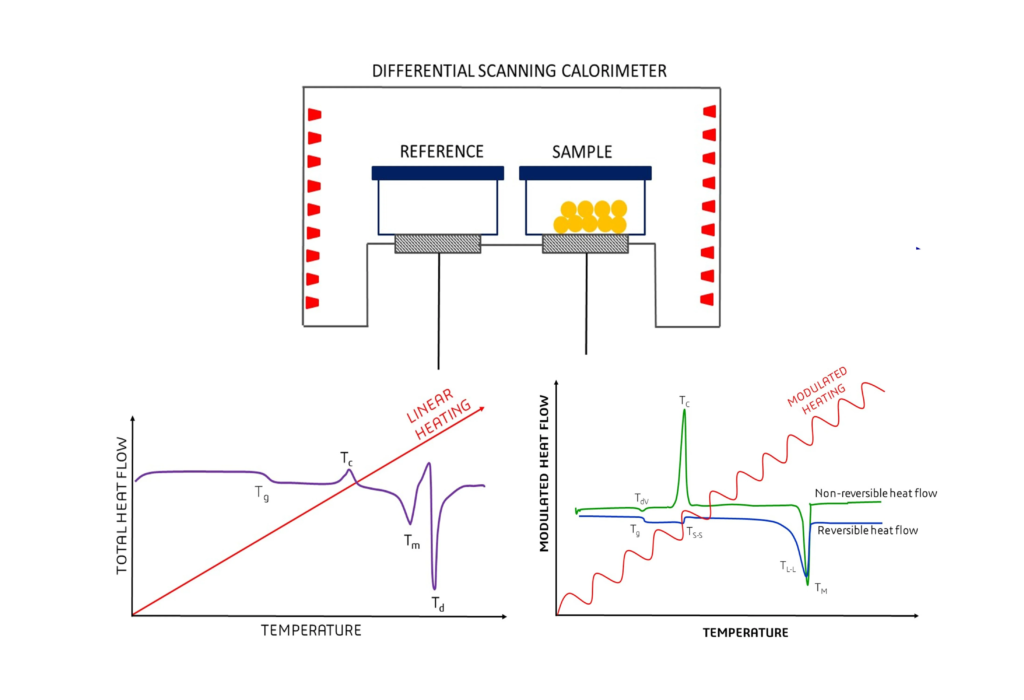
DIFFERENTIAL SCANNING CALORIMETRY (DSC)

Differential Scanning Calorimetry (DSC) Test Machine Export by Amin Polymer

Amin polymer specializes in the export of high-quality differential scanning calorimetry (dsc) test machines to the gcc and middle east countries. Our differential scanning calorimeter equipment ensures precise thermal analysis for polymers, measuring transitions like glass transition temperature and melting point. With competitive differential scanning calorimetry price and cost-effective solutions, Amin Polymer Export to GCC and the Middle East Countries delivers reliable DSC devices for industries. Get in touch with Amin Polymer to explore our offerings in differential scanning calorimetry instrumentation.

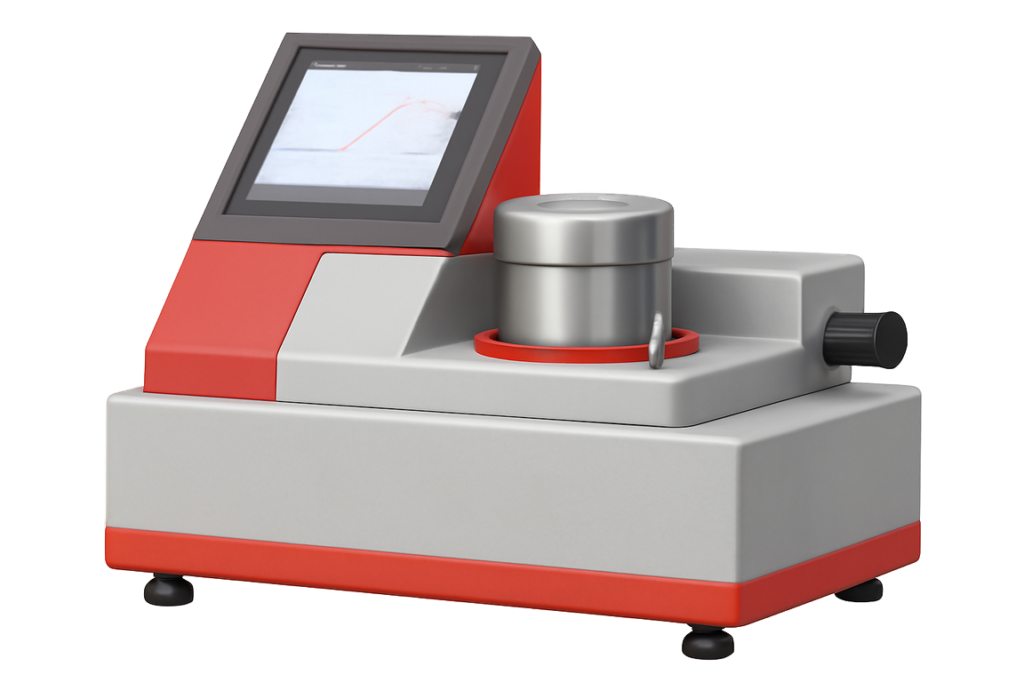
1. Differential Scanning Calorimetry Test Overview and Purpose

Differential scanning calorimetry, often abbreviated as (DSC) differential scanning calorimetry, is a pivotal thermal analysis technique used in the polymer industry. At Amin Polymer, we emphasize the importance of differential scanning calorimetry analysis for understanding material behaviors under varying temperatures. This method, known as scanning differential calorimetry, measures the heat flow associated with phase transitions in polymers, providing insights into their thermal properties.

1.1. Differential Scanning Calorimetry Test Definition and Objective


Define differential scanning calorimetry as a thermoanalytical method that quantifies the difference in heat required to increase the temperature of a sample and a reference material. The objective of differential scanning calorimetry (DSC) is to detect thermal transitions such as melting, crystallization, and glass transitions. What is differential scanning calorimetry? It is an essential tool for characterizing polymers, ensuring quality in manufacturing. Amin Polymer utilizes differential scanning calorimetry explained through precise instrumentation to aid in polymer development. The principle of differential scanning calorimetry involves maintaining both sample and reference at the same temperature while monitoring energy input differences.

What is differential scanning calorimetry (DSC)? It's a technique that reveals the thermal stability and composition of materials. Types of differential scanning calorimetry include conventional and modulated differential scanning calorimetry, each offering unique advantages like separating reversible and non-reversible events. Disadvantages of differential scanning calorimetry may include sample size limitations, but its benefits far outweigh them for polymer testing.

1.2. What Is the Application of a Differential Scanning Calorimetry Test and What Does It Measure?


Polymer quality control: It identifies impurities and assesses crystallinity, crucial for product consistency in Amin Polymer Export to GCC and the Middle East Countries.

phase change detection: Measures melting points and enthalpies, aiding in material selection for harsh environments.

To measure: Heat capacity changes, glass transition temperature, and thermal transitions like fusion or oxidation.

Differential scanning calorimetry for polymers: Determines crystallinity and glass transition temperature, enhancing material performance.

Polymers testing: Evaluates thermal stability, vital for applications in automotive and packaging sectors.

DSC and calorimetric analysis: Provide data on heat capacity via differential scanning calorimetry heat capacity measurements.

Differential scanning calorimetry, often abbreviated as (DSC) differential scanning calorimetry, is a pivotal thermal analysis technique used in the polymer industry. At Amin Polymer, we emphasize the importance of differential scanning calorimetry analysis for understanding material behaviors under varying temperatures. This method, known as scanning differential calorimetry, measures the heat flow associated with phase transitions in polymers, providing insights into their thermal properties.

2. Differential Scanning Calorimetry Test Procedure and Specimen

The differential scanning calorimetry procedure begins with careful sample preparation. For polymers, specimens are typically small, around 5-10 mg, to ensure uniform heating. Differential scanning calorimetry sample preparation involves crimping the sample into an aluminum pan, often under inert atmosphere to prevent oxidation.

2.1. Differential Scanning Calorimetry Test Method

Tensile Test Method Description Tensile Test Method Description Tensile Test Method Description

2.2. Technical Specifications of Differential Scanning Calorimetry


TECHNICAL SPECIFICAITON

%table_title_1%%table_title_2%%table_title_3%%table_title_4%

Test Type

Value 1

Value 2

Value 3

Load Capacity

Value 1

Value 2

Value 3

Measurement Accuracy

Value 1

Value 2

Value 3

Test Grips

Value 1

Value 2

Value 3

Loading Rate

Value 1

Value 2

Value 3

User Interface

Value 1

Value 2

Value 3

Measurable Parameters

Value 1

Value 2

Value 3

3. Differential Scanning Calorimetry Test Standards (ASTM & ISO)


Standards ensure consistency in differential scanning calorimetry testing. Amin Polymer adheres to international protocols for all exports.

3.1. ASTM D3418 Differential Scanning Calorimetry Test Standard

ASTM D3418 outlines the test method for transition temperatures and enthalpies of polymers using differential scanning calorimetry. It specifies procedures for determining melting and crystallization points, promoting accurate thermal property testing with DSC.

3.2. ISO Differential Scanning Calorimetry Test Standard For Polymers

ISO 11357 provides guidelines for plastics via differential scanning calorimetry (DSC), covering general principles and specific methods for crystallization kinetics. This standard supports applications of DSC in quality assurance.

4. Differential Scanning Calorimetry Test Results and Mechanical Properties

Differential scanning calorimetry interpretation involves analyzing the thermogram for peaks indicating transitions. Results reveal mechanical properties influenced by thermal history, such as toughness linked to glass transition. Differential scanning calorimetry graph shows heat flow versus temperature, with endothermic peaks for melting. Amin Polymer provides expert differential scanning calorimetry graph analysis for clients.

4.1. Differential Scanning Calorimetry Test Curve and Data Analysis


This differential scanning calorimetry curve illustrates typical polymer behavior, aiding in differential scanning calorimetry graph interpretation.

4.2. Quality Control for Polymer Products

  • Thermal analysis with DSC detects defects early.
  • DSC for thermal property testing ensures material purity.
  • Phase change detection with DSC verifies composition.
  • Differential calorimeter assesses batch consistency.
  • (DSC) differential scanning calorimetry analysis prevents failures in end-use.

5. Export of Differential Scanning Calorimetry Test Machines to Middle East


Amin Polymer Export to GCC and the Middle East Countries focuses on delivering advanced DSC devices to regions like Saudi Arabia and UAE.

5.1. Export Markets and Applications

Markets include oil & gas and construction, where differential scanning calorimetry explained helps in material optimization.

5.2. Why Choose Amin Polymer for Thermogravimetric Analyzers Test  Equipment Export


Amin Polymer provides superior technology, attractive test price, and comprehensive service. Our Amin Polymer Export to GCC and the Middle East Countries includes training and warranties, ensuring long-term satisfaction and trust in analyzer test.

6. Frequently Asked Questions

6.1. What is differential scanning calorimetry used for?

It's used for measuring thermal transitions in polymers to assess properties like melting point.

6.2. What is the differential scanning calorimetry diagram?

It typically shows a heat flow curve against temperature.

6.3. How much is a differential scanning calorimeter price?

Prices vary; Request a Quotation from Amin Polymer.

6.4. What are the disadvantages of differential scanning calorimetry?

Limited to small samples and potential overlap of transitions.

6.5. Explain (DSC) differential scanning calorimetry analysis.

Assesses degradation for quality in manufacturing.

A M I N   P O L Y M E R    T R U S T E D    S E R V I C E


˃Submission of requests via an online contact portal

˃Swift responses to technical and trade-related inquiries

˃Detailed price quotations tailored to export markets

˃Customized design and production to meet international standards

˃Efficient and secure global shipping solutions

˃Comprehensive technical support throughout the product’s lifecycle

Find what you’re looking for