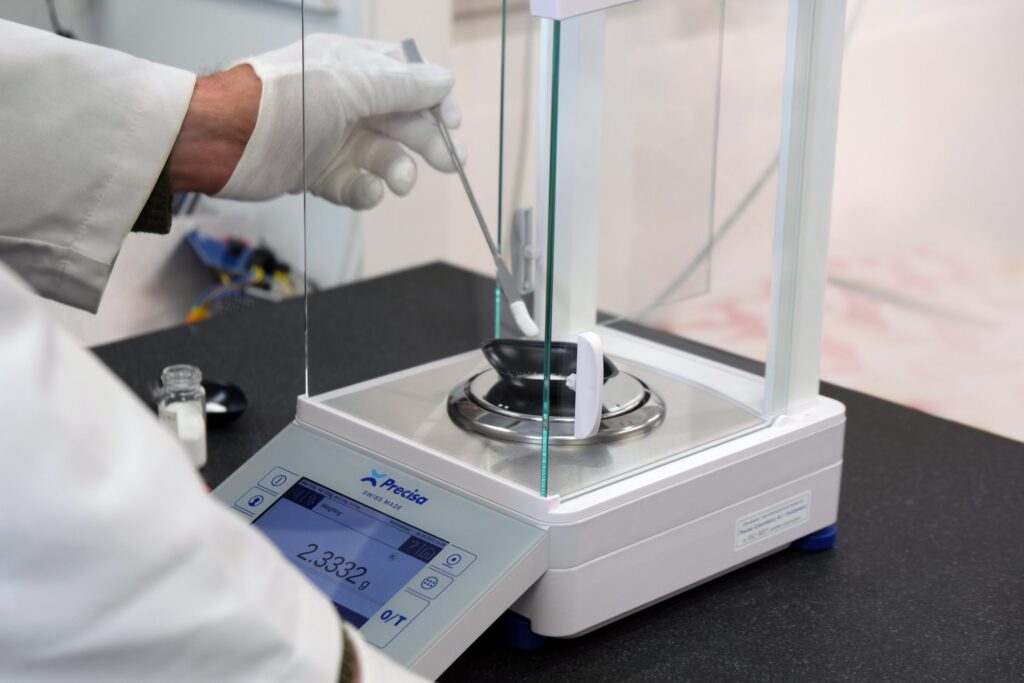
LABORATORY BALANCE

Laboratory balance Export by Amin Polymer

Amin Polymer is a leading provider of high-quality laboratory balance solutions, specializing in exports to the GCC and Middle East regions. Our laboratory balance scales, including analytical balance 4 digits models, ensure precision in weighing for various applications. With a focus on reliability, Amin Polymer Export to GCC and the Middle East Countries delivers top-tier balance for laboratory equipment that meets international standards. Whether you need a weighing balance for laboratory or digital laboratory balance, our products guarantee accuracy and durability. Trust Amin Polymer for seamless exports and exceptional service in the polymer industry.

1. Laboratory balance Overview and Purpose

Laboratory balances are essential tools in scientific and industrial settings, particularly for precise measurements in polymer testing and quality control. Amin Polymer, a trusted name in polymer solutions, offers a range of laboratory balance options designed to enhance accuracy in labs across the GCC and Middle East. The balance lab equipment from Amin Polymer integrates advanced technology to provide reliable results, making it ideal for demanding environments.

1.1. Laboratory balance Definition and Objective


A laboratory balance is a precision instrument used to measure mass with high accuracy, often down to 0.0001 grams. Its primary objective is to ensure exact weighing in controlled settings, minimizing errors from environmental factors. In polymer contexts, the analytical laboratory balance helps determine material properties like density and composition. Amin Polymer's laboratory balance weights and scales are calibrated for optimal performance, supporting research and production needs. The analytical balance apparatus from Amin Polymer features robust construction, ensuring longevity and consistent readings.

The balance laboratory equipment serves as a cornerstone for experiments requiring meticulous mass determination. For instance, the analytical balance scale measures small samples accurately, crucial for polymer formulation. Amin Polymer Export to GCC and the Middle East Countries emphasizes models with analytical balance accuracy that exceeds industry expectations. This precision aids in achieving reproducible results, building trust in your lab processes. Get in touch with Amin Polymer to explore how our balance laboratory apparatus can elevate your operations.

Furthermore, the analytical balance function involves sensitive sensors that detect minute weight changes, making it indispensable for quality assurance. Amin Polymer's offerings include types of laboratory balance suited for various scales, from micro to semi-micro. The laboratory balance uses extend to verifying chemical reactions in polymer synthesis, where even slight discrepancies can impact outcomes. Our commitment to excellence ensures that every weighing balance laboratory from Amin Polymer meets stringent criteria.

In summary, the objective of a laboratory balance is to provide verifiable mass measurements, fostering innovation in polymer fields. Amin Polymer Export to GCC and the Middle East Countries prioritizes customer satisfaction by supplying equipment that combines technical prowess with commercial value. Request a Quotation today to experience the difference in our analytical balance uses in laboratory settings.

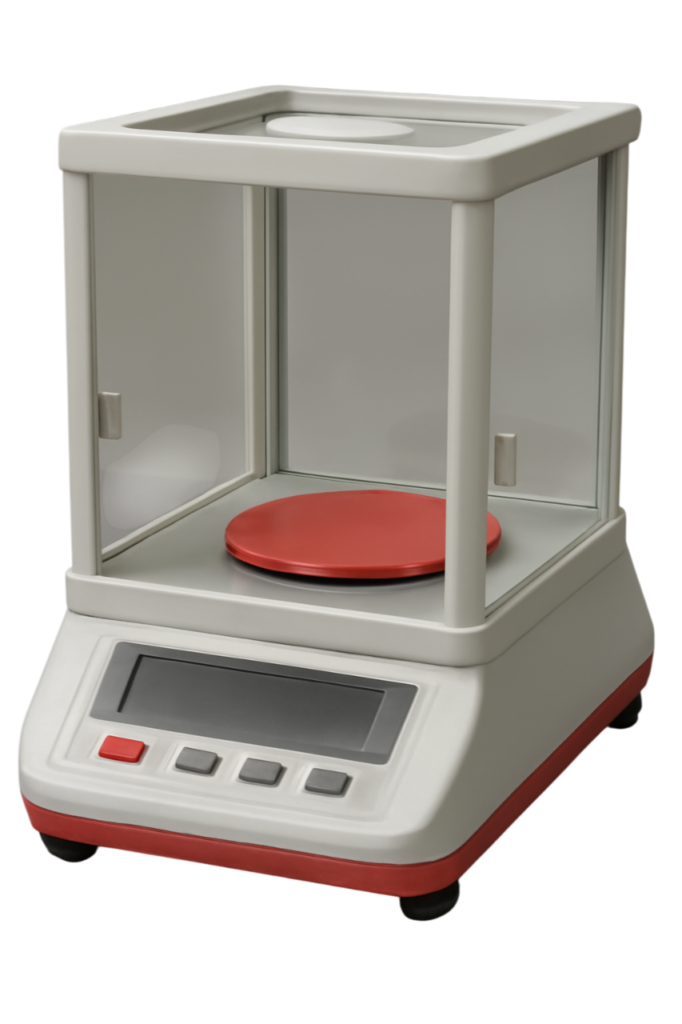
1.2. What is the Application of Laboratory balance and What Does it Measure?


Polymer Density Determination: The laboratory balance measures mass for calculating density using methods like immersion, essential for quality control in plastic manufacturing.

Sample Preparation: Weighing balance in laboratory precisely measures polymer additives and resins, ensuring accurate formulations in compounding processes.

Gravimetric Analysis: Analytical balance uses involve measuring moisture content or volatiles in polymers by weight loss, aiding in material characterization.

Calibration and Verification: Balance scale uses in laboratory include verifying instrument accuracy with standard weights, maintaining compliance in regulated industries.

Research and Development: Digital balance laboratory apparatus uses extend to quantifying small-scale reactions, measuring catalysts or monomers for polymer synthesis experiments.

Laboratory balances are essential tools in scientific and industrial settings, particularly for precise measurements in polymer testing and quality control. Amin Polymer, a trusted name in polymer solutions, offers a range of laboratory balance options designed to enhance accuracy in labs across the GCC and Middle East. The balance lab equipment from Amin Polymer integrates advanced technology to provide reliable results, making it ideal for demanding environments.

2. Laboratory balance Procedure and Specimen

Operating a laboratory balance requires careful procedures to ensure accuracy and safety. Amin Polymer provides comprehensive guides for using our precision laboratory balance models, tailored for polymer labs in the GCC and Middle East.

2.1. Laboratory balance Method

Tensile Test Method Description Tensile Test Method Description Tensile Test Method Description

2.2. Technical Specifications of Laboratory balance

TECHNICAL SPECIFICAITON

%table_title_1%%table_title_2%%table_title_3%%table_title_4%

Test Type

Value 1

Value 2

Value 3

Load Capacity

Value 1

Value 2

Value 3

Measurement Accuracy

Value 1

Value 2

Value 3

Test Grips

Value 1

Value 2

Value 3

Loading Rate

Value 1

Value 2

Value 3

User Interface

Value 1

Value 2

Value 3

Measurable Parameters

Value 1

Value 2

Value 3

3. Laboratory balance Standards


Amin Polymer ensures all laboratory balance products comply with global standards, fostering trust in exports to the Middle East.

The ASTM E898-20 standard outlines practices for calibrating non-automatic weighing instruments, ensuring accuracy in lab settings. It covers testing top-loading balances for repeatability and linearity, crucial for polymer applications. Amin Polymer's balances adhere to this, providing reliable performance.

ISO 17025 specifies general requirements for the competence of testing and calibration labs, including balance use in polymer density tests like ISO 1183. This ensures precise measurements for material properties. Amin Polymer Export to GCC and the Middle East Countries integrates these standards for superior quality.

4. Laboratory balance Results and Mechanical Properties

Results from laboratory balances inform polymer mechanical properties, such as tensile strength via accurate mass inputs. Amin Polymer's analytical balance range supports detailed analysis, yielding data for property optimization. The use of laboratory balance in verifying weights directly impacts test reliability, enhancing product durability assessments.

4.1. Laboratory balance Curve and Data Analysis

4.2. Quality Control for Polymer Products

  • Consistency Checks: Laboratory balance table ensures uniform batch weights, preventing variations in polymer extrusion.
  • Impurity Detection: Weighing balance for laboratory identifies contaminants by mass discrepancies.
  • Compliance Verification: Analytical balance cost-effectiveness aids in meeting regulatory specs.
  • Process Optimization: Laboratory balance price balances with performance for efficient QC.
  • Traceability: Digital laboratory balance logs data for audit trails in polymer production.

5. Export of Laboratory balance to Middle East

Amin Polymer excels in exporting laboratory balances to the Middle East, catering to growing polymer sectors. Key markets include Saudi Arabia, UAE, and Qatar, where balances support oil-derived polymer testing. Applications span R&D to manufacturing. Amin Polymer Export to GCC and the Middle East Countries offers competitive pricing, swift delivery, and after-sales support. Our how to use analytical balance in laboratory resources build user expertise. Choose us for proven reliability


6. Frequently Asked Questions

6.1. What is laboratory balance?

A precision tool for mass measurement in labs, like Amin Polymer's models.

6.2. Balance used in lab types?

Includes analytical and precision; Amin Polymer provides both.

6.3. Laboratory balance uses?

For weighing polymers accurately in testing.

6.4. Analytical balance types?

Semi-micro to ultra-micro; contact us for options.

6.5. Laboratory weighing balance price?

Competitive; Request a Quotation from Amin Polymer.

A M I N   P O L Y M E R    T R U S T E D    S E R V I C E


˃Submission of requests via an online contact portal

˃Swift responses to technical and trade-related inquiries

˃Detailed price quotations tailored to export markets

˃Customized design and production to meet international standards

˃Efficient and secure global shipping solutions

˃Comprehensive technical support throughout the product’s lifecycle

Find what you’re looking for